

Buying a new pair of sneakers can be exciting, but appearance alone doesn’t tell you whether a pair is actually well made. Two sneakers can look almost identical while feeling completely different after a few weeks of regular use.
If you’re shopping online or in a physical store, knowing what to look for can help you avoid poorly made sneakers and choose a pair that is comfortable, durable, and suitable for how you plan to wear it.
In this guide, we’ll look at the simple things you can check before buying sneakers, from the stitching and materials to the sole, finishing, and overall construction.
1. Check the Stitching
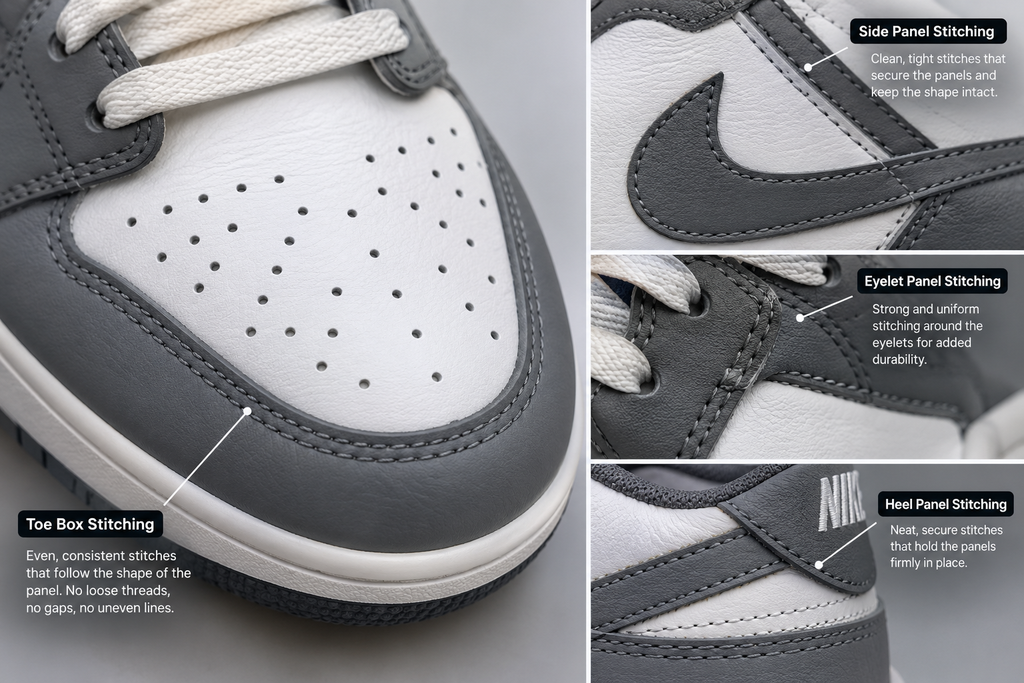
One of the easiest ways to inspect sneaker quality is to look closely at the stitching.
Good-quality sneakers usually have stitching that looks reasonably even and secure. Check around areas such as:
- The toe box
- The sides of the upper
- The heel
- Where the upper meets the sole
- Around logos and panels
Loose threads, uneven stitching, or stitching that appears to be coming apart can be signs that the shoe may not have been finished carefully.
That doesn’t automatically mean every sneaker with a loose thread is poor quality, but several visible construction problems should make you inspect the pair more carefully.
2. Examine the Materials
The material used on a sneaker affects its appearance, comfort, breathability, and durability.
Depending on the sneaker, you may see materials such as:
- Leather
- Suede
- Mesh
- Canvas
- Synthetic materials
- Knit fabrics
Don’t judge a sneaker simply because it uses an expensive-sounding material. Instead, look at how the material feels and how well it has been finished.
For example, mesh should generally feel properly constructed rather than extremely thin or fragile, while leather or synthetic uppers should not have obvious cracks or poor finishing when the shoe is new.
If you’re shopping online, carefully check the product description and photos to understand what materials are actually being used.
3. Inspect the Sole
The sole is one of the most important parts of a sneaker because it takes a lot of impact during walking and running.
Look at the outsole and midsole carefully.
A well-constructed sole should appear properly attached to the upper without obvious gaps or separation. The tread pattern should also look clean and properly formed.
If you’re buying a sneaker for everyday walking, pay attention to the outsole design and cushioning rather than choosing based only on appearance.
A fashionable sneaker isn’t necessarily the right choice for long periods of walking.
4. Look for Excessive Glue
Small traces of adhesive can sometimes appear during manufacturing, so a tiny amount of glue doesn’t automatically mean a sneaker is badly made.
However, large amounts of visible glue around the sole, panels, or other parts of the shoe can indicate poor finishing.
Before buying, look carefully around the edges where the upper meets the sole.
If you notice:
- Large glue marks
- Uneven adhesive
- Gaps between the sole and upper
- Areas that appear to be separating
take a closer look before making your purchase.
5. Check the Inside of the Sneaker
Don’t only inspect the outside.
The inside of the sneaker can tell you a lot about its construction and comfort.
Check the insole, inner lining, heel area, and stitching inside the shoe.
Look for obvious rough edges or materials that could rub against your feet. The heel lining should also feel reasonably comfortable because constant friction in this area can cause discomfort or blisters.
If you’re buying online, look for photos that show the inside of the sneaker. If those photos aren’t available, you can ask the seller for additional pictures.
6. Test the Flexibility
A sneaker should generally have an appropriate amount of flexibility for its intended purpose.
Try gently flexing the shoe if you’re shopping in person.
The goal isn’t to bend the sneaker as much as possible. Instead, you’re checking whether it moves naturally and whether the sole and upper work together properly.
Keep in mind that different sneakers are designed differently.
A running shoe, basketball shoe, lifestyle sneaker, and walking shoe may all have different levels of flexibility because they are designed for different activities.
7. Check the Overall Construction
Take a few seconds to look at the entire sneaker.
Ask yourself:
- Do both shoes look symmetrical?
- Are the panels properly aligned?
- Does the sole sit evenly?
- Are the logos and design elements positioned correctly?
- Are there visible manufacturing defects?
- Does the shoe look properly finished?
A single small imperfection may not matter, but several issues together can be a reason to reconsider the purchase.
8. Don’t Judge Quality by Price Alone
A common mistake is assuming that an expensive sneaker must automatically be better quality.
Price can be influenced by many things, including the brand, design, technology, marketing, materials, and demand.
Likewise, a lower-priced sneaker isn’t automatically poorly made.
Instead of asking only, “How much does it cost?”, look at what you’re actually getting for the price.
Consider the materials, construction, comfort, intended use, and overall finishing.
9. Consider What You Will Use the Sneakers For
Quality isn’t only about durability.
A sneaker can be well made and still be the wrong choice for you.
For example, a stylish lifestyle sneaker may work well for casual outfits but may not be the best option for someone who spends several hours walking every day.
Before buying, think about how you’ll use the sneakers.
For everyday casual wear
Look for comfortable materials, reasonable cushioning, and a durable outsole.
For running
Pay more attention to cushioning, fit, weight, stability, and the shoe’s intended running purpose.
For long walks
Comfort, fit, cushioning, and support become particularly important.
For gym workouts
Consider the type of training you do because different workouts can require different levels of stability and flexibility.
10. Check the Size and Fit
Even a high-quality sneaker can become uncomfortable if you buy the wrong size.
Your toes should have enough room to move without your foot sliding excessively inside the shoe. Your heel should feel secure without being painfully tight.
Don’t assume that your size will be identical across every sneaker brand or model.
Sizing can vary between brands and even between different models from the same brand.
If you’re buying online, check the seller’s size chart and compare the measurements with your foot whenever possible.
11. Pay Attention to the Seller
When buying sneakers online, the quality of the seller matters too.
Look for sellers who provide:
- Clear product photos
- Accurate product descriptions
- Available sizing information
- Clear return or exchange policies
- Reliable customer support
- Transparent delivery information
Be especially careful when product photos are unclear or the description provides very little information.
A trustworthy seller should make it reasonably easy for you to understand what you’re buying before you pay.
A Simple Sneaker Quality Checklist
Before buying, quickly check these areas:
| What to Check | What to Look For |
|---|---|
| Stitching | Even and secure stitching |
| Materials | Properly finished, suitable materials |
| Sole | Secure attachment and clean construction |
| Glue | Minimal visible adhesive |
| Inside | Comfortable lining and clean finishing |
| Flexibility | Appropriate for the sneaker’s purpose |
| Construction | Good alignment and overall finishing |
| Fit | Secure but comfortable |
| Size | Correct measurements |
| Seller | Clear information and buying policies |
What About Brand Names?
A well-known brand can give you useful information about the product’s intended design and specifications, but the brand name alone shouldn’t be the only thing you consider.
Different sneaker models are designed for different purposes.
Instead of choosing a sneaker simply because the logo is familiar, look at the specific model, materials, construction, fit, and intended use.
Final Thoughts
You don’t need to be a sneaker expert to recognize basic signs of quality.
Before buying, take a few minutes to inspect the stitching, materials, sole, glue, inside lining, flexibility, and overall construction. Then make sure the sneaker is appropriate for how you intend to use it and that the size is right for your feet.
If you’re buying online, don’t be afraid to ask the seller for additional photos or information before placing your order.
A good-looking sneaker is great, but a sneaker that is well constructed, comfortable, properly fitted, and suitable for your lifestyle is much more useful.
Looking for your next pair of sneakers? Explore CAEKICKS for sneaker guides, trends, and footwear options to help you make a more informed choice.