

A good pair of sneakers should feel comfortable enough to wear without constantly thinking about your feet. But even a stylish or well-made pair can sometimes feel tight, stiff, or uncomfortable, especially when it is new.
The good news is that you do not always need to replace your sneakers. Simple changes such as adjusting the laces, choosing better socks, or giving your shoes time to break in can make a noticeable difference.
In this guide, we will look at 10 simple ways to make sneakers more comfortable and help you get more out of the pairs you already own.
1. Make Sure You Are Wearing the Right Size
One of the biggest reasons sneakers feel uncomfortable is wearing the wrong size.
Your toes should have enough room to move naturally without hitting the front of the shoe. At the same time, your heel should feel secure without slipping excessively.
Remember that your feet can change slightly over time, and sizing can also vary between sneaker brands and models.
If a pair feels uncomfortable from the moment you put it on, do not automatically assume that you simply need to “break it in.” A poor fit can continue causing problems even after wearing the sneakers several times.
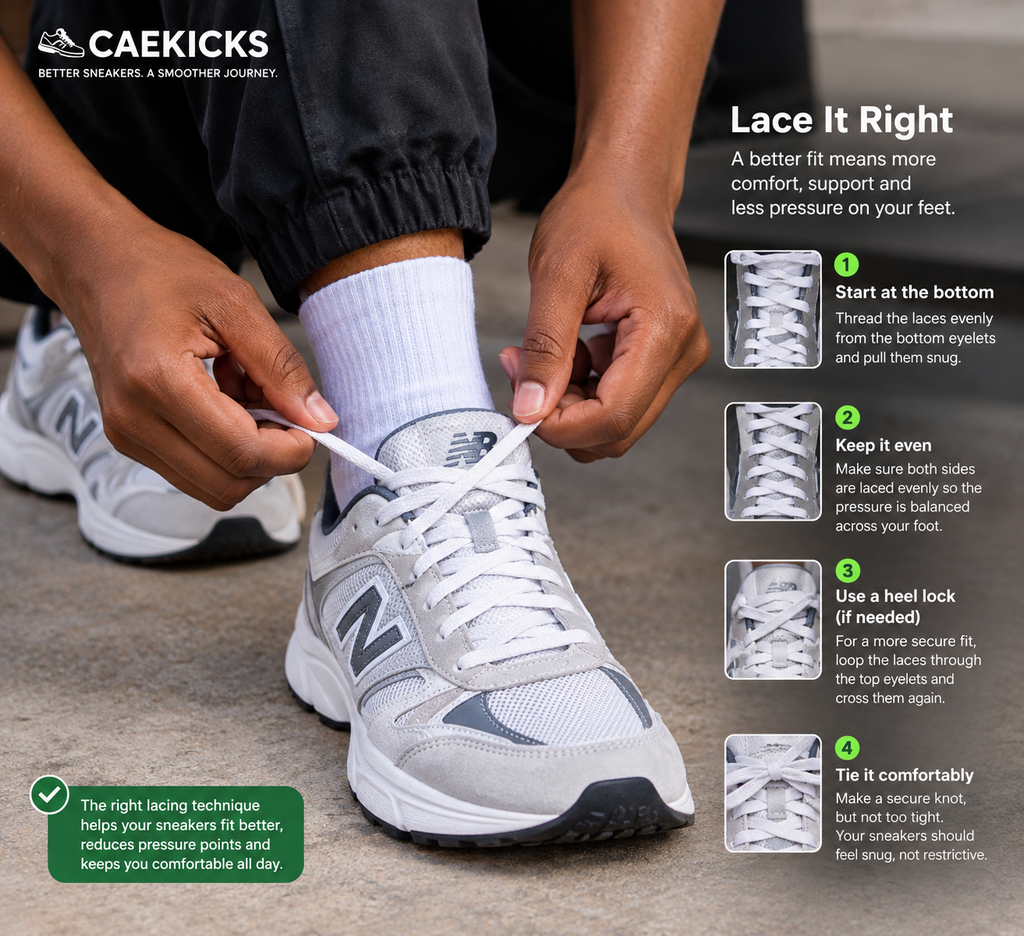
2. Adjust Your Laces Properly
Sometimes the problem is not the sneaker itself but the way it is laced.
If your sneakers feel too tight across the top of your foot, try loosening the laces slightly. If your heel keeps slipping, using a heel-lock or runner’s-loop lacing technique can provide a more secure fit.
3. Wear the Right Socks
Socks can make a surprisingly big difference in sneaker comfort.
Very thin socks may provide little cushioning, while extremely thick socks can make an already tight sneaker feel even tighter.
Look for socks that fit comfortably and provide enough cushioning for the way you use your sneakers. For running or long walks, moisture-wicking socks can also help keep your feet more comfortable.
4. Give New Sneakers Time to Break In
Some sneakers feel stiff when they are brand new.
Instead of wearing a new pair for an entire day immediately, start by wearing them for shorter periods around the house or during short outings.
This allows the materials to gradually become more flexible while giving you a chance to discover whether there are any uncomfortable pressure points.
However, there is an important difference between a sneaker that needs breaking in and a sneaker that does not fit properly.
If the shoes consistently cause significant discomfort, forcing yourself to wear them is not the solution.
5. Consider a Comfortable Insole
If the original insole does not provide enough cushioning or support, replacing it with a suitable aftermarket insole may improve comfort.
Different insoles are designed for different needs. Some focus on cushioning, while others provide additional arch support or help improve the overall feel of the shoe.
Before buying one, make sure there is enough room inside the sneaker. A thick insole can make a shoe feel tighter.
6. Avoid Wearing the Same Sneakers Every Day
Your sneakers can benefit from having a break between wears.
Wearing the same pair every day exposes the materials to repeated pressure, sweat, and moisture. Giving your sneakers time to air out can help them feel fresher and may also help preserve their shape.
If you wear sneakers frequently, rotating between two or more pairs can be a simple way to give each pair some rest.
7. Pay Attention to Pressure Points
Notice exactly where your sneakers become uncomfortable.
Is the toe box too tight? Does the heel rub? Is there pressure across the top of your foot? Does the sole feel too hard?
Identifying the problem makes it easier to find the right solution.
For example, loosening the laces may help pressure across the top of your foot, while a different sneaker with a wider toe box may be necessary if your toes feel cramped.
8. Keep Your Sneakers Clean and Dry
Clean sneakers can also feel more comfortable.
Dirt and sweat can build up inside and around your shoes, while moisture can make them feel unpleasant to wear.
After wearing your sneakers, especially in hot or humid conditions, allow them to dry naturally in a well-ventilated area.
Avoid using excessive heat to dry sneakers because high temperatures can damage certain materials and adhesives.
9. Choose Sneakers for the Activity
Not every sneaker is designed for every activity.
A lifestyle sneaker may be perfectly comfortable for casual outings but may not provide the features you want for running or long periods of walking.
Think about how you plan to use the sneaker before choosing it.
For example:
- Running: Look for appropriate cushioning, fit, and stability.
- Walking: Prioritize comfort, flexibility, and a secure fit.
- Everyday wear: Look for a balance of comfort, durability, and style.
- Standing for long periods: Consider cushioning and support that suit your feet.
Choosing the right type of sneaker can prevent many comfort problems before they start.
10. Replace Sneakers That Are Too Worn Out
Sometimes there is nothing you can adjust to make an old sneaker comfortable again.
If the outsole is heavily worn, the cushioning has become noticeably flat, the shoe has lost its structure, or the upper is badly damaged, it may be time to replace the pair.
Wearing a sneaker long after its useful life can affect how it feels under your feet.
A good rule is to pay attention to the condition of the shoe rather than relying only on how old it is.
Why Do My Sneakers Hurt My Feet?
There can be several reasons sneakers feel uncomfortable.
Common causes include:
- The sneakers are too small.
- The toe box is too narrow.
- The heel is slipping.
- The laces are too tight.
- The sneaker does not provide enough cushioning for your activity.
- The shoes are still stiff because they are new.
- The sneakers are worn out.
- You are wearing unsuitable socks.
Finding the specific cause is more useful than simply trying to make the shoe softer.
Should Sneakers Feel Tight When They Are New?
New sneakers can feel slightly stiff, but they should not cause significant pain.
A little stiffness may improve as the materials become more flexible. However, if your toes are cramped, your heel is constantly rubbing, or your feet hurt after only a short time, the issue may be the fit rather than the fact that the sneakers are new.
Comfort should be part of the buying decision from the beginning.
How to Make Sneakers More Comfortable for Walking
If you spend a lot of time walking, focus on fit first.
Make sure your toes have enough room, your heel feels secure, and the sneaker feels comfortable throughout your normal walking motion.
You can also experiment with different socks and lacing techniques. If the sneaker still feels uncomfortable after these adjustments, it may simply not be the right model for your feet.
Final Thoughts
Making sneakers more comfortable does not always require buying a new pair.
Small adjustments such as changing your socks, loosening your laces, using a suitable insole, breaking in new sneakers gradually, and keeping your shoes dry can make a noticeable difference.
But comfort starts with choosing the right sneaker and the right size. If a pair consistently causes discomfort despite reasonable adjustments, it may be better to find a sneaker that fits your feet more naturally.
At CAEKICKS, we believe sneakers should look good while still being practical enough for everyday life. Before your next purchase, take the time to consider fit, comfort, purpose, and durability — not just appearance.