

Have you ever bought a brand-new pair of sneakers, only to notice that they somehow look even better after you’ve worn them for a few months?
There is a reason for that.
Some sneakers are designed—or simply made from materials—that develop more character as they age. Small creases, changes in texture, faded colors and natural marks can give a sneaker a personality that a completely untouched pair does not have.
This is especially noticeable with leather, suede and canvas sneakers. Instead of looking damaged, they can develop what sneaker enthusiasts often call a worn-in look or patina.
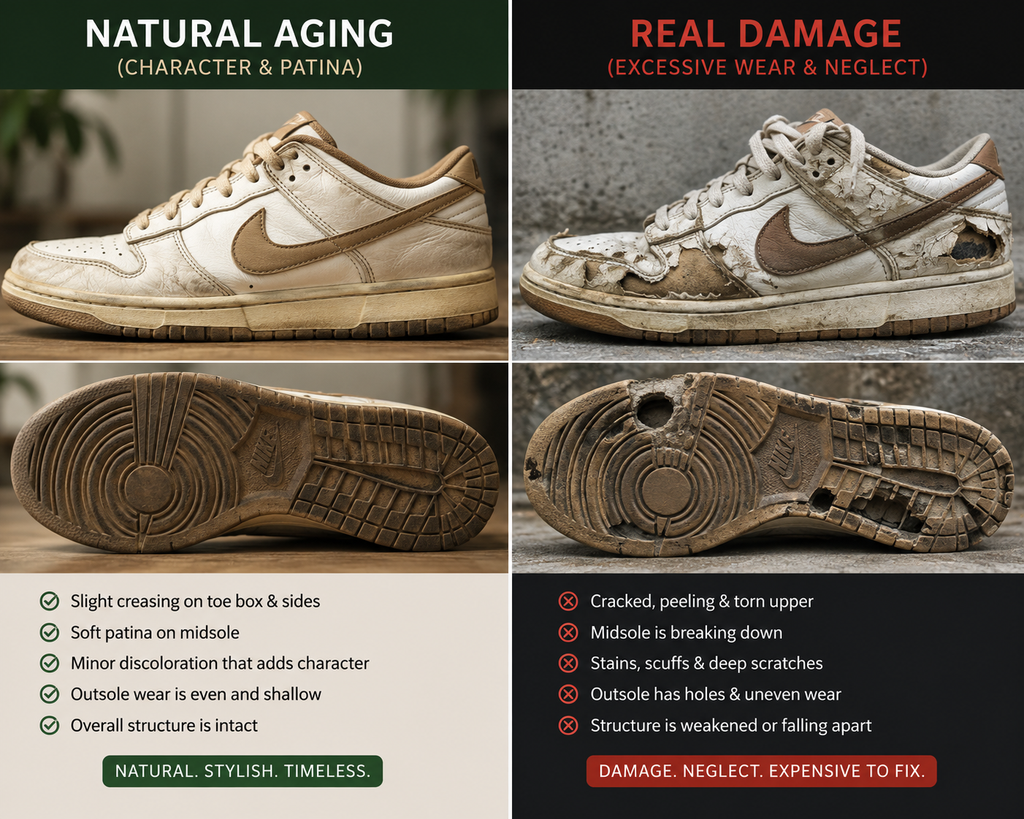
But there is an important difference between a sneaker that looks naturally aged and one that is simply worn out.
Let’s take a closer look.
What Does “Worn-In” Mean?
A worn-in sneaker is a shoe that has developed visible signs of use while still maintaining its structure, comfort and overall appearance.
Think of a favorite pair of jeans. They may not look exactly like they did when you bought them, but the changes can actually make them feel more personal.
Sneakers can work the same way.
After regular use, you may notice:
- Natural creasing around the toe box
- Slight changes in leather texture
- Fading around high-contact areas
- Suede becoming softer
- Small marks that tell the story of where you’ve worn them
- A slightly broken-in shape that feels more comfortable
These changes aren’t necessarily bad.
In fact, some sneaker collectors actively look for them.
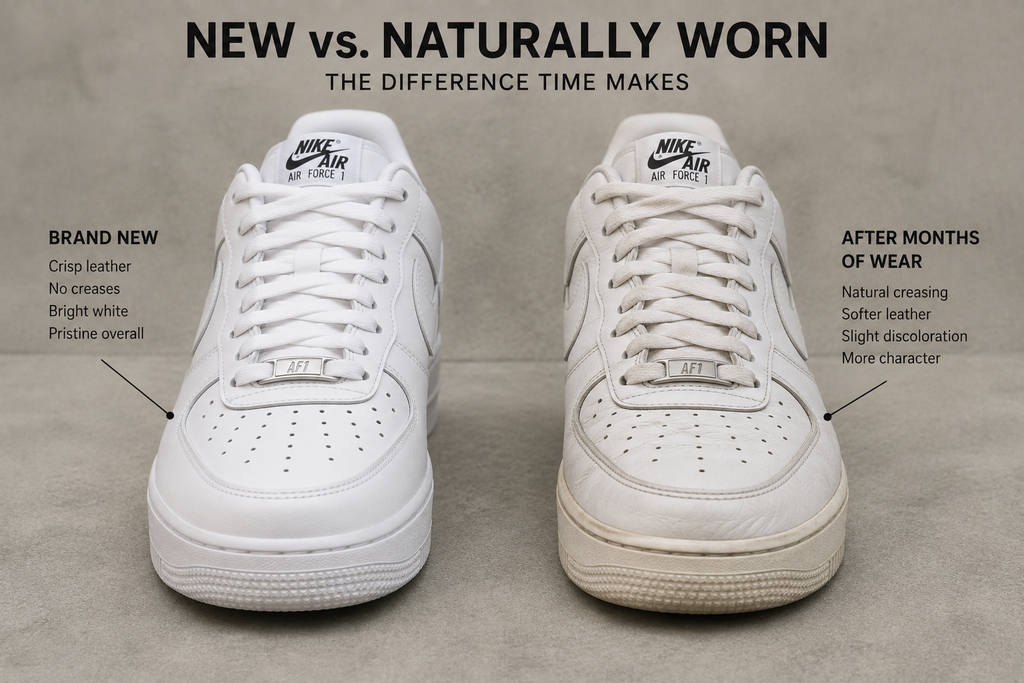
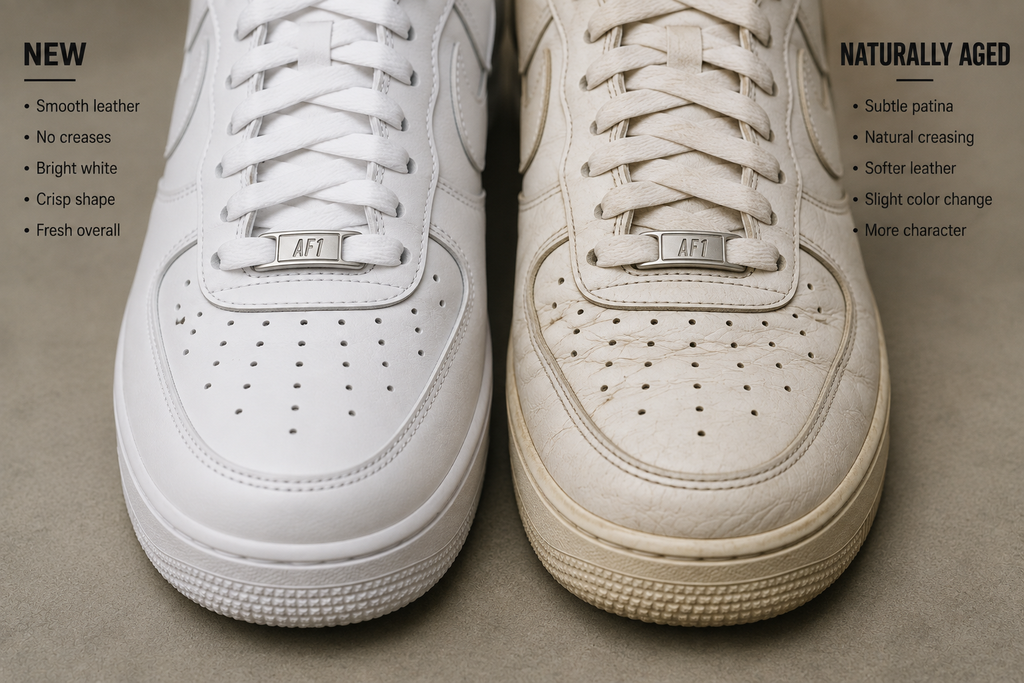
Why Leather Sneakers Often Get Better With Age
Leather is one of the biggest reasons some sneakers become more attractive over time.
High-quality leather can change as it is exposed to movement, handling and everyday use. The surface may develop subtle variations in color and texture, creating a more distinctive appearance.
This process is often referred to as patina.
The key is that good aging should still leave the sneaker looking cared for.
For example, a leather sneaker with gentle creasing and a slightly softer finish can look stylish.
A sneaker with cracked leather, exposed material or a badly damaged sole is a different story.
That’s why the quality of the material matters.
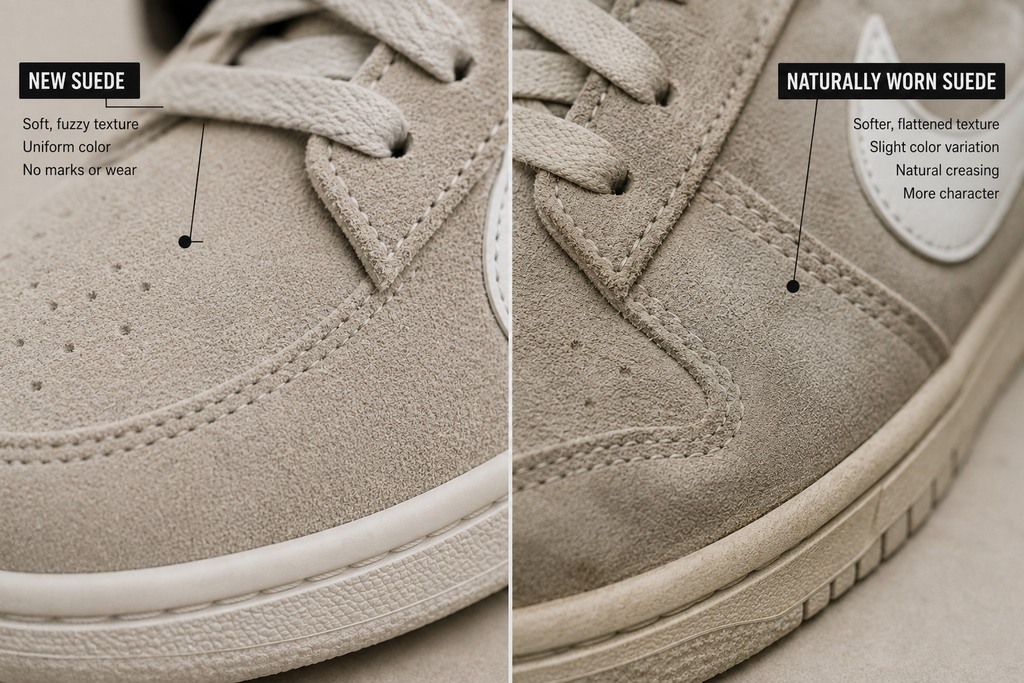
Suede Can Become More Interesting With Wear Too
Suede has a completely different aging process.
Instead of developing the same type of shine that leather can develop, suede can change texture as it is handled and worn.
A pair of suede sneakers can become softer and develop variations in the nap, giving them a more relaxed appearance.
However, suede also requires more care.
Water, mud and excessive dirt can permanently affect its appearance. So while natural aging can look great, neglect can quickly turn a good-looking suede sneaker into a damaged one.
The goal isn’t to keep your sneakers completely untouched. It’s to let them age naturally while still taking care of them.
Creases Don’t Always Mean Your Sneakers Are Ruined
One of the biggest sneaker debates is creasing.
Some people try everything possible to keep their sneakers completely crease-free. Others believe that creasing is simply part of wearing a sneaker.
The truth is somewhere in the middle.
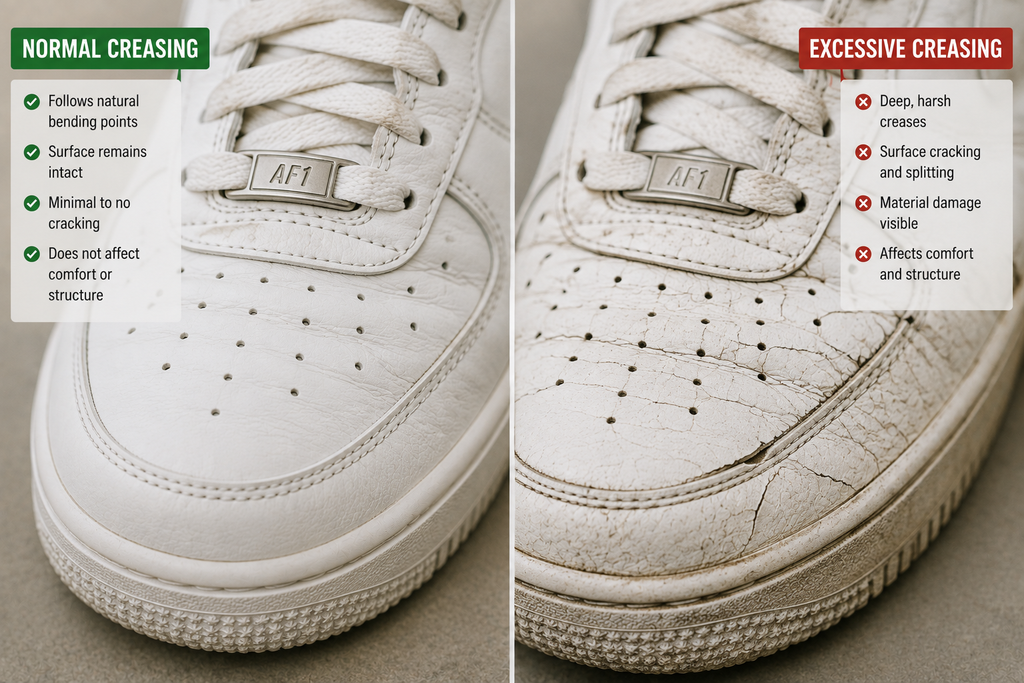
A certain amount of creasing is normal because your foot bends when you walk.
The important question is how severe the creasing becomes.
Natural creasing:
- Usually follows the foot’s bending point
- Doesn’t affect the shoe’s structure
- Doesn’t cause major cracks
- Doesn’t make the shoe uncomfortable
Severe creasing combined with material cracking, separation or structural deformation can be a sign that the sneaker is reaching the end of its useful life.
The Difference Between Worn-In and Worn-Out
This is where things get important.
A sneaker can look old without being finished.
At the same time, a sneaker can look relatively clean while having serious structural problems.
Worn-in sneakers usually have:
| Worn-In | Worn-Out |
|---|---|
| Natural creases | Deep cracking |
| Minor surface marks | Major material damage |
| Slight fading | Excessive discoloration |
| Comfortable shape | Loss of structural support |
| Good outsole condition | Heavily worn outsole |
| Secure stitching | Separation or broken stitching |
A sneaker that has developed character but still provides proper support can continue to be useful.
But when the outsole becomes dangerously smooth, the midsole breaks down or the upper begins separating from the sole, appearance should no longer be the main concern.
Some Sneaker Materials Age Better Than Others
Not every sneaker is going to develop an attractive aged appearance.
The material plays a major role.
1. Leather
Leather can develop patina, creasing and subtle changes in texture.
Best for: People who enjoy a classic, mature appearance.
2. Suede
Suede can become softer and develop a unique texture.
Best for: Casual and vintage-inspired styles.
3. Canvas
Canvas sneakers can fade and soften, sometimes creating a relaxed vintage appearance.
Best for: Casual everyday outfits.
4. Mesh
Mesh is comfortable and breathable, but it generally doesn’t develop the same type of attractive patina as leather.
Instead, dirt and discoloration can become more noticeable.
Best for: Running, walking and performance-focused sneakers.

Why Vintage Sneakers Have So Much Character
There is a reason vintage sneakers continue to attract attention.
Part of their appeal comes from the way they look different from perfectly clean, factory-fresh shoes.
Older sneakers can have:
- Faded colors
- Softened materials
- Natural creasing
- Slightly yellowed midsoles
- Distinctive textures
- Signs of previous use
These characteristics can create a sense of history.
Of course, vintage doesn’t automatically mean better. A sneaker can be old and still be in poor condition.
The appeal comes from the combination of age, design, materials and condition.
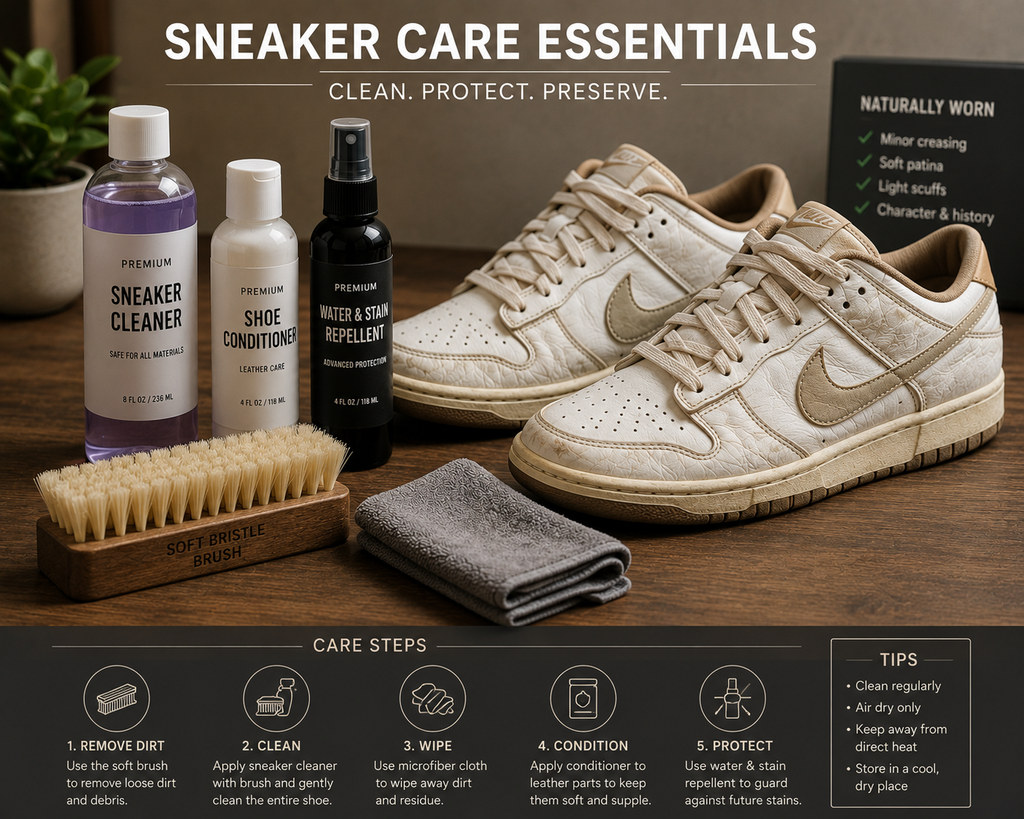
How to Let Your Sneakers Age Naturally
You don’t need to deliberately destroy your sneakers to make them look vintage.
The best-looking aging usually happens naturally.
Here’s what you can do:
1. Wear them regularly
A sneaker develops character through actual use.
2. Clean them gently
Remove dirt without aggressively scrubbing the material.
3. Use the right cleaning method
Leather, suede, canvas and mesh shouldn’t all be cleaned in exactly the same way.
4. Let them dry naturally
Avoid excessive heat that can damage materials or adhesives.
5. Store them properly
Keep sneakers somewhere cool, dry and away from unnecessary moisture.
6. Don’t obsess over every crease
If you actually wear your sneakers, some creasing is unavoidable.
The goal is to maintain the sneaker—not prevent it from ever looking worn.
When Should You Stop Wearing an Old Sneaker?
Eventually, every sneaker reaches a point where appearance becomes less important than function.
Look at the outsole first.
If the tread is heavily worn down, traction can become worse.
Also check for:
- Sole separation
- Large cracks
- Damaged cushioning
- Exposed midsole material
- Broken stitching
- Uneven outsole wear
- Loss of comfort or stability
If the sneaker no longer feels safe or comfortable, it may be time to replace it.

Sneakers That Look Better With Wear
Some sneaker styles naturally lend themselves to an aged appearance.
Classic leather sneakers
Their simple construction allows natural creasing and patina to become part of the look.
Canvas sneakers
Fading and softening can give them a relaxed vintage character.
Suede sneakers
The changing texture can make them look more personal over time.
Retro-inspired sneakers
Their designs often already embrace vintage aesthetics, making natural wear less noticeable.
The important thing isn’t whether a sneaker is expensive.
It’s whether the materials and design can handle everyday wear while still looking good.
Should You Keep Your Sneakers Perfectly Clean?
Not necessarily.
There’s nothing wrong with keeping your sneakers extremely clean if that’s your preference.
But don’t be afraid of normal signs of use.
A little creasing doesn’t automatically make a sneaker unattractive.
A few marks don’t automatically mean it’s ruined.
And a slightly aged sneaker can sometimes look more authentic and more interesting than a pair that has never left the box.
The key is knowing the difference between character and neglect.
Final Thoughts
The best sneakers aren’t always the ones that stay exactly the same from the day you buy them.
Some become more interesting as you wear them.
Leather can develop patina. Suede can soften. Canvas can fade. Creases can tell the story of where you’ve been.
That’s part of what makes sneakers more than just something you put on your feet.
They become part of your everyday style.
So the next time you notice a few natural creases on your favorite pair, don’t immediately think your sneakers are ruined.
Sometimes, you’re simply watching them become yours.
👟 CAEKICKS Take
At CAEKICKS, we believe sneakers should be worn—not simply kept perfect in a box.
Whether you prefer a fresh-out-of-the-box look or love the character of a well-worn pair, the right sneaker should fit your lifestyle and your personal style.
Wear them. Care for them. Make them yours.
CAEKICKS — Step Into Your Style.